Thirty minutes on a clear, cold evening. Find the three stars of Orion's belt, name the red shoulder and the bright foot, then use the belt as a pointer to the brightest star in the night sky.
Dad Field Manual editors · Drafted with AI help · Published Oct 15, 2026
A flashlight covered with red cellophane or red tapeHave / $3
A blanket or camp chairsHave
Paper and a pencil to sketch the starsHave
Where: A familiar spot at home with a view to the east and as few lights in your eyes as you can manage.
Before you go out
Stay in your yard or another place you know, and tell whoever is home where you'll be.
Dress in layers, with a warm hat and mittens, and cover exposed skin. Standing still at night gets cold fast.
Don't walk while looking up. Stop, then look, or lie on a blanket.
Come in when anyone is shivering or their fingers, ears or nose feel numb.
02Steps
Pick the night and the time
DadChoose a clear night. In October Orion clears the eastern horizon late in the evening; through November and December it comes up earlier, and by December it is rising in the east as evening falls. The 1911 book says the stars come up about an hour earlier every fifteen days.
Let your eyes adjust
TogetherTurn off the porch light and put phones away. Use only the red flashlight. Give your eyes 20 to 30 minutes in the dark; the stars keep getting easier to see while you wait.
Find the belt
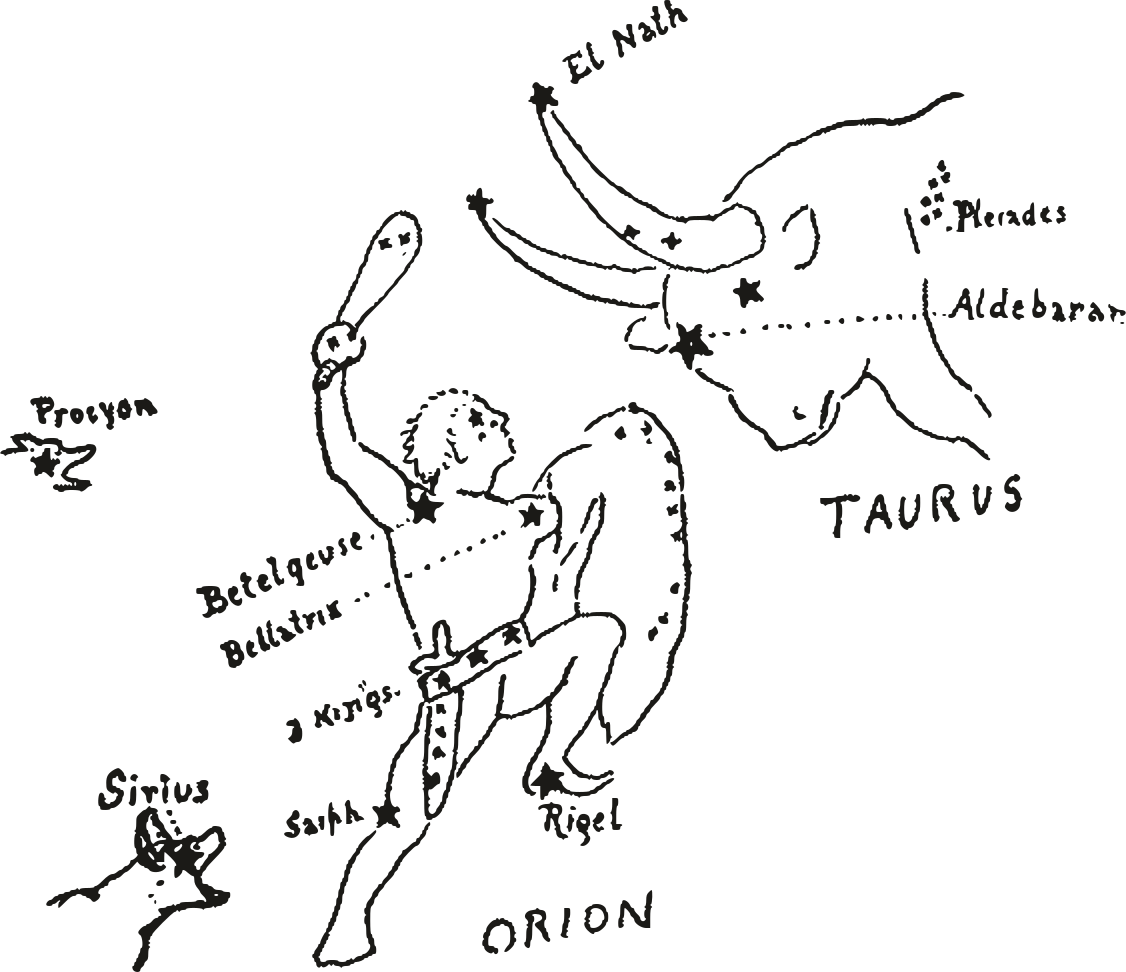
KidFace east and look for three bright stars close together in a short, nearly straight line. That's Orion's belt. The 1911 book says people called them the Three Kings.
Name the shoulder and the foot
TogetherLook above and below the belt for two bright stars on each side: the shoulders and the feet. The reddish one at a shoulder is Betelgeuse. The bright blue-white one at a foot is Rigel, the brightest star in Orion. Ask: "Which one looks red to you?"
FIG: Orion and Taurus, with the Pleiades, from the 1911 scouting handbook, p. 84.
Follow the belt both ways
Dad showsKid copiesHold an arm out along the belt's line. Follow it one way to Sirius, the brightest star in the night sky, which the 1911 book calls the hunter's dog. Follow it the other way to orange Aldebaran, the bull's eye in Taurus.
Sketch it and sign off
KidDraw the belt, the four corner stars, Sirius and Aldebaran by the red light. When they can find the belt and name two stars without help, sign their field card. Next clear night, find the North Star with the Big Dipper.
03If it stalls
If you can't see Sirius yet, wait. The hunter's dog follows the hunter, so early in the evening it may still be below the horizon or behind trees.
If the sky looks empty, a light is probably in your eyes. Move so the house blocks the streetlight and wait a few more minutes.
If they get cold or bored, go inside, warm up, and come back out for five minutes. Orion will have climbed a little.
Once they know the shape, look for Orion on every clear night this winter. It's easy to show a friend.
04Variations
Ages 3–5
Just the belt. Count the three stars together, then find them again the next clear night.
Ages 6–9
The full plan.
Ages 10+
Find the Pleiades too: the 1911 book puts them on the bull's shoulder, near Aldebaran. Then find the Big Dipper and the North Star on the same night.
ColdHats, mittens and a thermos of something warm. Keep it to 20 minutes outside and warm up between looks.
CloudyWait for a clear night. Draw Orion from the picture on this card instead so they know what to look for.
A field card like this one for the weekend, one quick plan for a weeknight, and nothing else. Free. The first letter hasn't gone out yet. Sign up now and you'll get it. beehiiv, which sends the letter, will email you once to confirm your address.
One weekend plan every Friday. We never sell your address, and every letter has a one-click unsubscribe. See a sample issue · Privacy
1911 scouting handbook, pp. 83–84. The 1911 book calls Orion the finest constellation, names Betelgeuse at the right shoulder and Rigel at the foot, calls the belt stars the Three Kings and says Orion is seen only in winter. It places Sirius in Orion's hound and shows Orion hunting Taurus, whose eye is Aldebaran. It says the stars appear about an hour earlier every fifteen days. Project Gutenberg (public domain in the USA) Checked Oct 15, 2026
Finding Orion, Betelgeuse and Rigel. NASA says to look for three bright stars in a near-straight line for Orion's belt, with two brighter stars marking the shoulders and two the feet. Betelgeuse is a red supergiant at Orion's right shoulder; Rigel, a blue supergiant at the left foot, is the brightest star in Orion. NASA Checked Oct 15, 2026
Orion rising, and the belt as a pointer. NASA JPL's December skywatching guide says Orion rises in the east as evening falls, with Taurus and orange Aldebaran above it, and that the belt stars point to Sirius, the brightest star in the night sky. NASA's March 2022 guide adds that the belt points the other way to Aldebaran. NASA Jet Propulsion Laboratory Checked Oct 15, 2026
Dark-adapted eyes, red light and cold. The National Park Service says eyes need 20 to 30 minutes to adjust fully to the dark, that bright white lights and phones spoil it, and that red cellophane or tape turns a flashlight red. The National Weather Service says to dress in layers, wear a warm hat and mittens, and cover exposed skin in the cold. National Park Service; National Weather Service Checked Oct 15, 2026
Dad Field Manual · Field card 92 · Classic Field Skills
Find Orion, the winter hunter
Thirty minutes on a clear, cold evening. Find the three stars of Orion's belt, name the red shoulder and the bright foot, then use the belt as a pointer to the brightest star in the night sky.
Time
30 min
Cost
$0
Ages
5 and up
Where
Yard, driveway or porch
Since 1911: The 1911 book says Orion is seen only in winter. It actually starts rising in the east in late-fall evenings, a little earlier each night. Streetlights and porch lights now wash out fainter stars, so turn off what you can and use a red light. A star app is optional; the belt is easy to find without one.
What you need
Warm layers, a hat and mittens for everyone
A flashlight covered with red cellophane or red tape
A blanket or camp chairs
Paper and a pencil to sketch the stars
Before you go out
Stay in your yard or another place you know, and tell whoever is home where you'll be.
Dress in layers, with a warm hat and mittens, and cover exposed skin. Standing still at night gets cold fast.
Don't walk while looking up. Stop, then look, or lie on a blanket.
Come in when anyone is shivering or their fingers, ears or nose feel numb.
Steps
Pick the night and the time. Pick a clear night; Orion rises in the east, earlier each week from late fall.
Let your eyes adjust. Lights off, red light only, and give your eyes 20 to 30 minutes.
Find the belt. Face east and find three bright stars in a short straight line: the belt.
Name the shoulder and the foot. Find reddish Betelgeuse at a shoulder and bright Rigel at a foot.
Follow the belt both ways. Follow the belt one way to Sirius, the other way to orange Aldebaran.
Sketch it and sign off. Sketch Orion and its pointers, then sign the field card.
If it stalls
If you can't see Sirius yet, wait. The hunter's dog follows the hunter, so early in the evening it may still be below the horizon or behind trees.
If the sky looks empty, a light is probably in your eyes. Move so the house blocks the streetlight and wait a few more minutes.