Forty-five minutes in a yard or park. Lay a short trail of 1911 trail signs from loose sticks and pebbles, let your kid follow it to a hidden note, then swap and clear every sign away.
Dad Field Manual editors · Drafted with AI help · Published Oct 15, 2026
Loose sticks and pebbles already lying on the groundFree
A whistle for each of youHave / $3
A folded note and a small treat for the end of the trailHave
Sidewalk chalk, for a trail on pavement insteadHave / $3
Where: A backyard, or a park lawn or path you know well, with no roads or water along the route.
Before you start
Stay within sight of each other the whole time. Every sign should be visible from the one before it.
Agree on whistle calls first, including one that means "come back to me now."
No route along roads, parking lots or water. Pick a lawn or a path you already know.
Loose things only. Don't break branches, pull plants or lift rocks from streams or park beds.
02Steps
Learn four signs
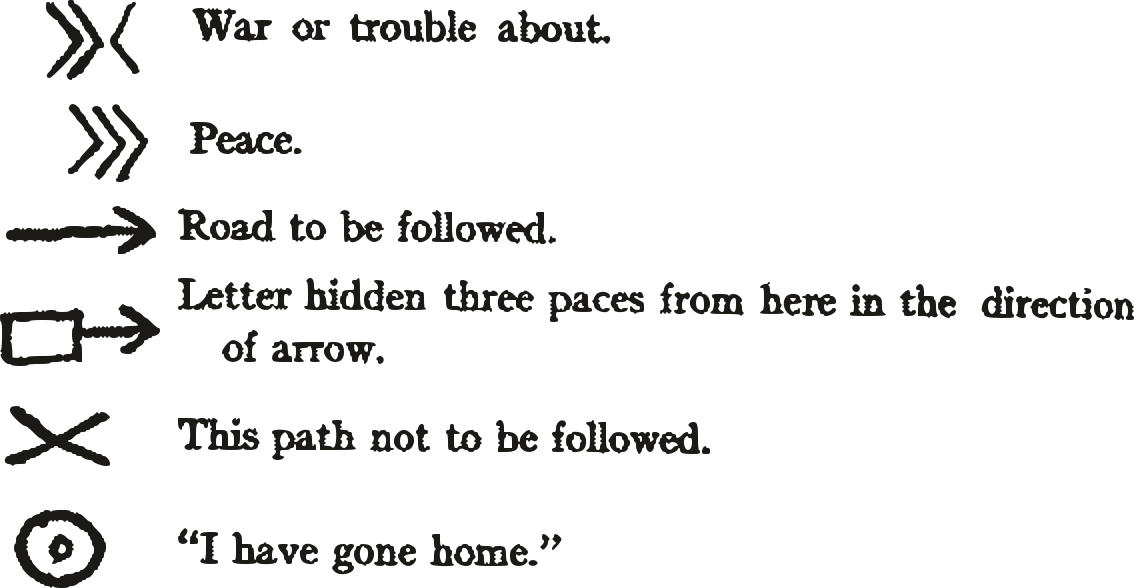
Dad showsKid copiesDraw four signs from the 1911 book in the dirt or on paper: an arrow for "road to be followed," an X for "this path not to be followed," a square with an arrow for "letter hidden three paces from here this way," and a circle with a dot for "I have gone home," the end of the trail.
FIG: Trail signs, from the 1911 scouting handbook, p. 210.
Set the boundaries and the whistle
TogetherWalk the edge of the play area together and say where it stops: "The trail never goes past the fence or the big tree." Agree on your whistle calls. The whistle and hand signals plan has a set to borrow.
Dad lays the trail
DadWhile the kid counts to 100 with eyes covered, lay 8 to 10 signs from loose sticks and pebbles, each in sight of the last. Put an X across one wrong turn. Near the end, lay a square-and-arrow sign and hide the note three paces that way. Finish with a circle and dot.
Add a water stop
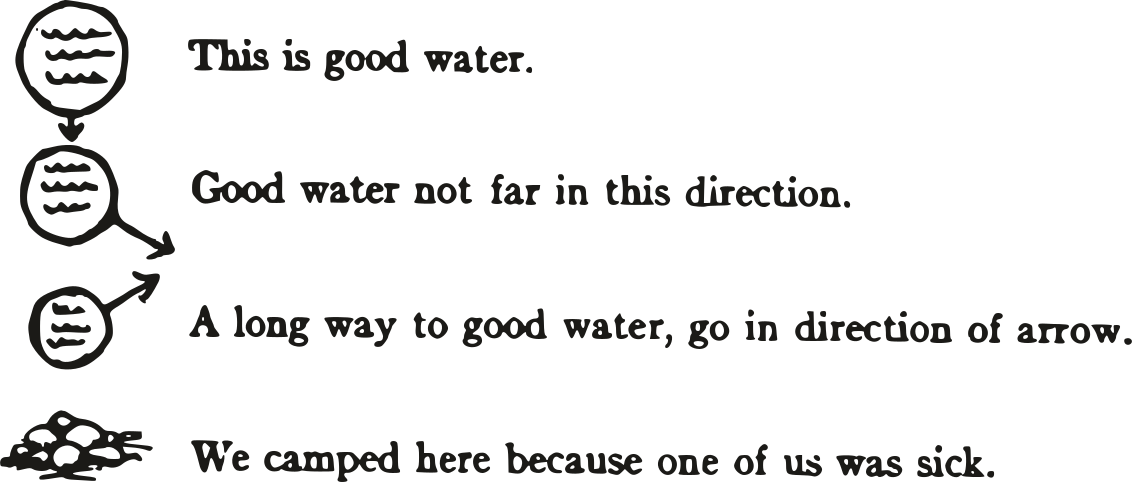
DadThe 1911 book also had signs for water: a circle with wavy lines meant "this is good water," and the same circle with an arrow meant "good water not far this way." Scratch one in the dirt or draw it in chalk next to a water bottle halfway along.
FIG: Water signs, from the 1911 scouting handbook, p. 209.
Kid follows the trail
KidThe kid follows the signs while you walk a few steps behind. Don't point. If they stall, ask "What does that sign say?" At the square-and-arrow sign, they count three paces and find the note.
Take it down, then swap
TogetherWalk the trail back together and undo every sign: scatter the sticks and set pebbles back where they came from. Then the kid lays a trail for you. Take that one down too.
03If it stalls
If the kid loses the trail, the signs are probably too far apart. Stand at the last sign and lay the next one where they can see it.
If sticks are scarce, use chalk on a driveway or path and hose it off after.
Let the kid's note say anything. A younger kid can draw a picture.
04Variations
Ages 3–5
Use only the arrow and the end circle, and lay five signs across one small yard.
Ages 6–9
The full plan.
Ages 10+
Make the trail longer, add a second X at a fork, and have the kid draw a map of the route afterward.
ColdSigns show well in light snow. Draw them with a stick and they melt away on their own.
RainChalk washes off. Wait for a dry hour, or lay the signs with sticks on the lawn.
A field card like this one for the weekend, one quick plan for a weeknight, and nothing else. Free. The first letter hasn't gone out yet. Sign up now and you'll get it. beehiiv, which sends the letter, will email you once to confirm your address.
One weekend plan every Friday. We never sell your address, and every letter has a one-click unsubscribe. See a sample issue · Privacy
1911 scouting handbook, pp. 209–210. The 1911 book shows trail signs with their meanings: an arrow for the road to be followed, an X for a path not to be followed, a square with an arrow for a letter hidden three paces away in the direction of the arrow, a circle with a dot for "I have gone home," and circles with wavy lines for good water and which way to find it. Project Gutenberg (public domain in the USA) Checked Oct 15, 2026
Leave No Trace in parks. The National Park Service summarizes the Leave No Trace principles: use a map and compass or GPS to eliminate the use of marking paint, rock cairns or flagging; leave rocks, plants and other natural objects as you find them; do not build structures; and know the regulations for the area you visit. National Park Service Checked Oct 15, 2026
Dad Field Manual · Field card 89 · Classic Field Skills
Lay a trail with 1911 trail signs
Forty-five minutes in a yard or park. Lay a short trail of 1911 trail signs from loose sticks and pebbles, let your kid follow it to a hidden note, then swap and clear every sign away.
Time
45 min
Cost
$0
Ages
5 and up
Where
Yard or park
Since 1911: The 1911 signs are the same, but laying them is not. The National Park Service's Leave No Trace principles say to leave rocks, plants and other natural objects as you find them, and to use a map and compass or GPS instead of rock cairns or flagging. Lay signs flat from loose sticks and pebbles, never stack rocks or break branches, and take every sign down when the game ends.
What you need
Loose sticks and pebbles already lying on the ground
A whistle for each of you
A folded note and a small treat for the end of the trail
Sidewalk chalk, for a trail on pavement instead
Before you start
Stay within sight of each other the whole time. Every sign should be visible from the one before it.
Agree on whistle calls first, including one that means "come back to me now."
No route along roads, parking lots or water. Pick a lawn or a path you already know.
Loose things only. Don't break branches, pull plants or lift rocks from streams or park beds.
Steps
Learn four signs. Learn four signs: arrow (follow), X (not this way), square with arrow (note three paces away), circle with dot (end).
Set the boundaries and the whistle. Walk the boundary together and agree on whistle calls before anyone lays a sign.
Dad lays the trail. Lay 8 to 10 flat signs in sight of each other, one X at a wrong turn, a hidden note, and an end circle.
Add a water stop. Draw a 1911 water sign next to a water bottle halfway along the trail.
Kid follows the trail. The kid follows the signs to the note while Dad walks behind without pointing.
Take it down, then swap. Walk back and undo every sign, then the kid lays a trail for Dad and you clear it again.
If it stalls
If the kid loses the trail, the signs are probably too far apart. Stand at the last sign and lay the next one where they can see it.
If sticks are scarce, use chalk on a driveway or path and hose it off after.