Paper, tape, a marker and scissors (Dad's) for ghost cutoutsHave
Where: A cleared floor with room to dance and throw something soft.
Before you start
Never over the face. Mummy wrap stops at the neck: no paper over the nose or mouth, and nothing tied around the neck.
Soft things only. Toss rolled socks or bean bags, never anything hard, and throw underhand.
Clear the floor. Move the coffee table and anything sharp before monster freeze.
02Steps
Mummy wrap
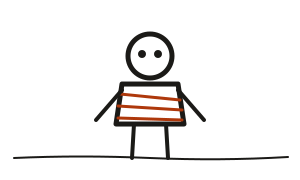
KidYou stand still as the mummy. Kids wrap you loosely with toilet paper, never over the face, and keep your feet and legs free so you can stand. See who can stay stillest while being wrapped. Then break out with a groan. All the paper comes off before you swap or move to the next game. Swap: you wrap them, neck down. About 10 minutes.
Monster freeze
TogetherPlay music; everyone dances like a monster. When the music stops, freeze in your scariest pose. Anyone who moves does a monster laugh. Five rounds, about 10 minutes.
Pumpkin toss
TogetherSet the bucket on the floor. Each player gets five rolled socks, tossed underhand from a line. Step back one big step after every round. About 10 minutes.
Ghost hunt
DadCut out ten paper ghosts before you start. Kids close their eyes while you tape them around the room, some low, some high. They count as they find them. Then they hide them for you. About 10 minutes.
Clean up as mummies
TogetherEveryone gathers the toilet paper into a ball. Toilet paper can't go in curbside recycling, so save it for next year's wrap or put it in the trash or compost. About 5 minutes. Ask, "Which game wins?"
03If it stalls
If they fight over who wraps, give each one a body part: one arm, the other arm, the middle.
If monster freeze gets too wild, switch to slow-motion monsters.
If the toss is too easy, make it a smaller box or turn around and throw backward.
04Variations
Ages 4–5
Mummy wrap and monster freeze are plenty. Ghosts at their eye level.
Ages 6–8
All four games, with a score sheet for the toss.
Ages 9–10
They run the games and the music for younger siblings, and you're a player.
A field card like this one for the weekend, one quick plan for a weeknight. Nothing else. The first letter hasn't gone out yet. You'll get one email to confirm.
Games and turn-taking. AAP says games like duck-duck-goose and tag help children build socio-emotional skills such as empathy, that play can improve children's abilities to plan, organize, get along with others and regulate emotions, and that simple, inexpensive objects and a parent's attention matter more than gadgets. American Academy of Pediatrics (HealthyChildren.org) Checked Oct 17, 2026