Thirty minutes, paper, a marker and a handful of checkers. Two 1911 games that train the eye: one tests what you see in five seconds, the other how far away you can see it.
Dad Field Manual editors · Drafted with AI help · Published Oct 15, 2026
Paper, a ruler and a marker for two 5-by-5 grids and two rabbit cardsHave
10 counters in two kinds: 5 red and 5 black checkers, or paper squares in two colorsHave
A dish towel or a book to cover the boardHave
Where: A table for Quicksight, and the longest hall or room in the house for Farsight.
Before you start
No nuts, coins or marbles as counters if a baby or toddler is around. Use checkers or paper squares.
Clear the hallway floor before Farsight, since the player walks forward watching the card, not their feet.
02Steps
Make two Quicksight boards
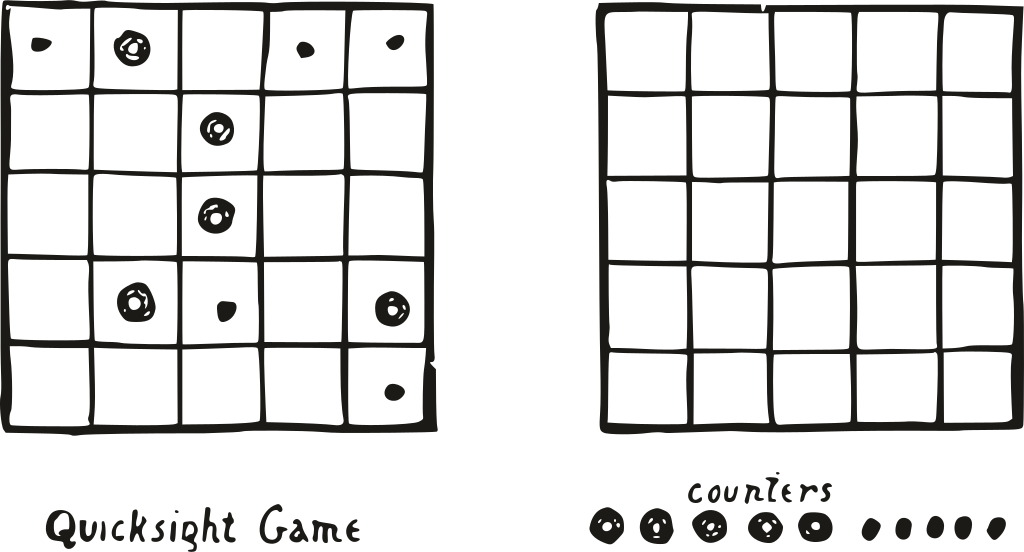
TogetherDraw two matching grids, 5 squares by 5, each about a foot across. The 1911 book used wooden boards; paper works the same. Give each player one board.
FIG: The game of Quicksight, from the 1911 scouting handbook, p. 298.
Play Quicksight
TogetherDad puts 5 red and 5 black counters on his board in any pattern while the kid looks away. Uncover it for five seconds ("one-Mississippi" to five), then cover it. The kid sets the same pattern on their board from memory.
Score and swap
TogetherUncover and compare. As the 1911 book scores it, one point for each counter in the right square, minus one for each wrong one. Swap roles and play turn and turn about.
Draw two rabbit cards
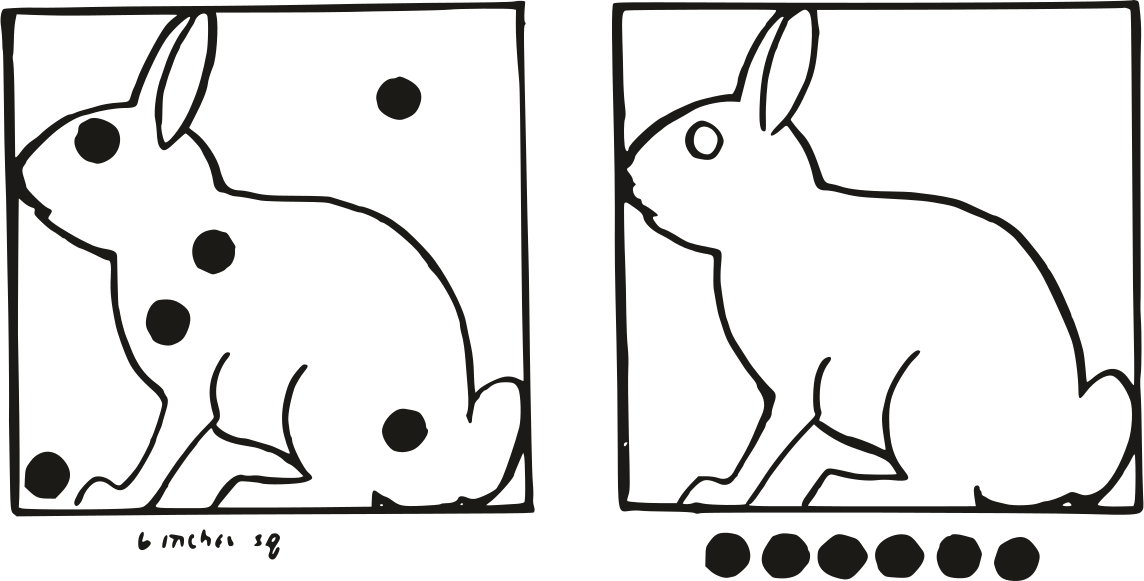
KidOn two cards about six inches square, draw the same simple rabbit outline, or trace one onto the other against a window. Any animal works.
FIG: Farsight, or Spot the Rabbit, from the 1911 scouting handbook, p. 299.
Play Farsight down the hall
TogetherDad draws 4 to 6 round spots, each about half an inch across, on one card and props it up in good light at one end of the hall. The kid starts at the far end with the blank card and steps closer, one step at a time, until they can copy the spots. Count the steps from the card.
Check and try to beat it
TogetherCompare the cards. A correct copy at more steps away beats your last best. Then Dad takes a turn. For more, play Kim's game with the same towel.
03If it stalls
If five seconds is too short, start with ten, or with six counters instead of ten.
If the kid copies the spots but gets the places wrong, ask "Which spot is nearest the ear?" to give them a landmark.
If your kid squints or has to stand much closer than others the same age, mention it to their pediatrician. The AAP says nearsightedness often starts between 6 and 14.
04Variations
Ages 5–6
A 3-by-3 grid and four counters for Quicksight; three big spots for Farsight.
Ages 7–9
The full plan.
Ages 10–12
Cut Quicksight to three seconds, or play Farsight outdoors across the yard, counting paces as the 1911 book counted yards.
A field card like this one for the weekend, one quick plan for a weeknight, and nothing else. Free. The first letter hasn't gone out yet. Sign up now and you'll get it. beehiiv, which sends the letter, will email you once to confirm your address.
One weekend plan every Friday. We never sell your address, and every letter has a one-click unsubscribe. See a sample issue · Privacy
1911 scouting handbook, pp. 298–299. The 1911 book describes Quicksight: two foot-square boards of 25 squares, five nuts and five pebbles placed in a pattern, shown for five seconds, then copied from memory, scoring one for each right and minus one for each wrong. It describes Farsight: two six-inch cards with matching rabbit outlines, half-inch black spots on one, and a player walking in from 100 yards until able to copy the pattern. Project Gutenberg (public domain in the USA) Checked Oct 15, 2026
Choking hazards. The American Academy of Pediatrics lists nuts, coins, marbles and toys with small parts among choking hazards for children, and says small round objects such as balls, marbles and pieces of toys cause the most choking deaths. American Academy of Pediatrics (HealthyChildren.org) Checked Oct 15, 2026
Nearsightedness in children. The American Academy of Pediatrics says myopia (nearsightedness) often begins between ages 6 and 14 and makes distant objects blurry, lists squinting as a sign, and says to talk with your pediatrician if you think your child has symptoms. American Academy of Pediatrics (HealthyChildren.org) Checked Oct 15, 2026
Dad Field Manual · Field card 91 · Classic Field Skills
Play Quicksight and Farsight: two eye games
Thirty minutes, paper, a marker and a handful of checkers. Two 1911 games that train the eye: one tests what you see in five seconds, the other how far away you can see it.
Time
30 min
Cost
$0
Ages
5 to 12
Where
Kitchen table and a hallway
Since 1911: The 1911 book uses nuts and pebbles as counters and plays Farsight outdoors from 100 yards. The AAP lists nuts, coins and marbles among choking hazards for young children, so use checkers or paper squares. Indoors, measure Farsight in steps down a hallway and try to beat your own best.
What you need
Paper, a ruler and a marker for two 5-by-5 grids and two rabbit cards
10 counters in two kinds: 5 red and 5 black checkers, or paper squares in two colors
A dish towel or a book to cover the board
Before you start
No nuts, coins or marbles as counters if a baby or toddler is around. Use checkers or paper squares.
Clear the hallway floor before Farsight, since the player walks forward watching the card, not their feet.
Steps
Make two Quicksight boards. Draw two matching 5-by-5 grids, each about a foot square.
Play Quicksight. Set 10 counters in a pattern, show it for five seconds, cover it, and copy it from memory.
Score and swap. Score plus one for each right counter, minus one for each wrong; swap roles.
Draw two rabbit cards. Draw the same animal outline on two six-inch cards.
Play Farsight down the hall. Prop a spotted card in good light; the kid walks closer until they can copy the spots. Count the steps.
Check and try to beat it. Compare the cards, record the steps, and try to beat your best.
If it stalls
If five seconds is too short, start with ten, or with six counters instead of ten.
If the kid copies the spots but gets the places wrong, ask "Which spot is nearest the ear?" to give them a landmark.