An hour in the mud, sand or snow. Make a trail of your own footprints, read what each track says, and then look for the real animals in your neighborhood.
Dad Field Manual editors · Drafted with AI help · Published Oct 15, 2026
A phone camera or paper and pencil to draw the tracksHave
A ruler or a stick to measure track lengthHave
Where: Soft ground such as mud after rain, damp sand or fresh snow.
Before you start
Watch wildlife from far away. Stay at least 25 yards from most animals and 100 from bears and wolves in many parks, and don't feed or approach any animal.
Don't touch droppings or dead animals, and wash hands afterward.
Stay on the trail in woods, and stay in sight of each other.
02Steps
Find soft ground
TogetherLook for mud after rain, damp sand or snow. The 1911 book says the second morning after a snowfall is better than the first, because animals stay in during a storm.
Dad lays a trail
DadWhile the kid looks away, Dad walks across the soft ground and adds a few clues: stop for a moment, run a few steps, turn around, scuff a foot.
Which way did he go?
KidThe kid reads the trail. The 1911 book says to be sure of the direction before you follow a trail, since many beginners go backward. Look at the toe and heel, and where the print is deeper or scuffed.
Read the story
TogetherAsk: "Where did he stop? Was he walking or running? Did he turn?" Check the answers with Dad. Then swap, and the kid lays a trail for Dad.
Look for real tracks
TogetherWalk the edge of a path, a creek or a muddy spot and look for any animal tracks. Photograph or draw each one, and measure it with a ruler.
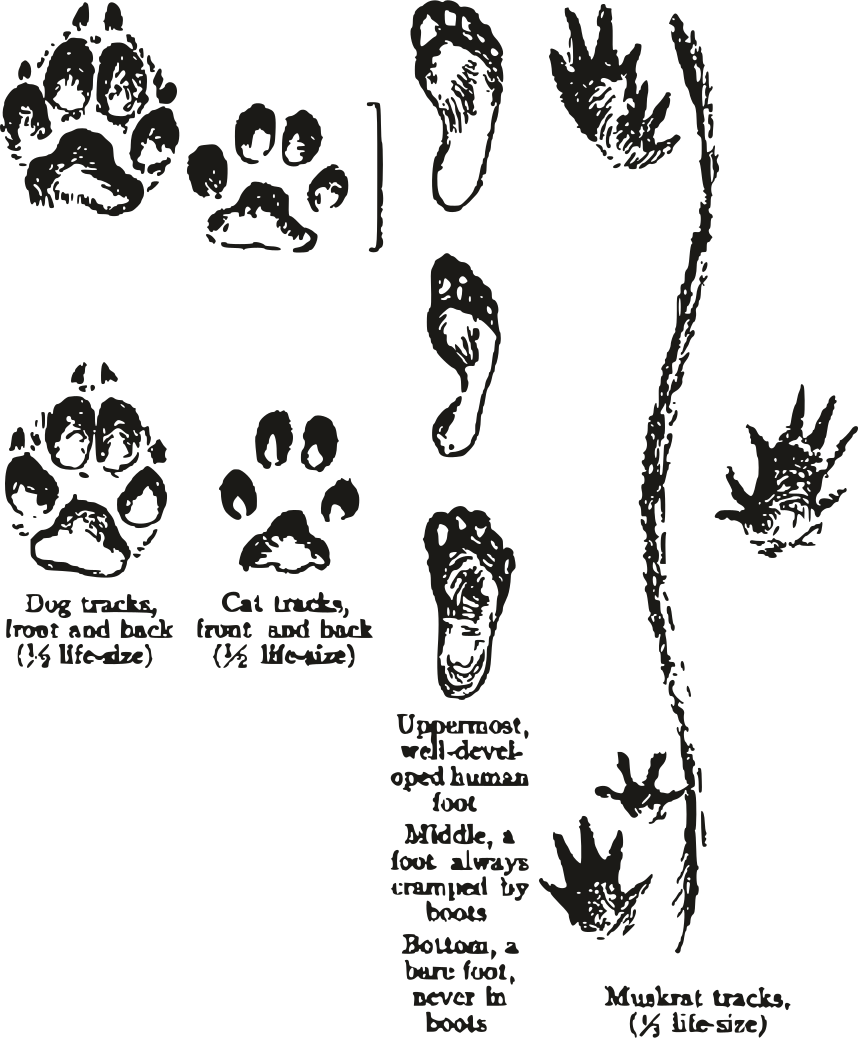
FIG: Dog, cat and human tracks, from the 1911 scouting handbook, p. 193.
Think about what's likely
TogetherThe 1911 book says to keep probabilities in mind: ask which animals really live near you. A big dog is more likely than a wolf. Then stop. Don't try to follow a track up to an animal.
03If it stalls
If the ground is too hard for prints, wet a patch with a hose and try again.
Photograph a track with a coin or ruler beside it to show its size.
No wild tracks? Pet and bird tracks count.
04Variations
Ages 3–5
Make big prints in a sandbox with toy animals and guess which toy walked there.
Ages 6–9
The full plan.
Ages 10+
Make a plaster cast of a clear print, or keep a track log with dates and places.
RainWet mud is perfect. Wear boots and wait for the rain to stop.
SnowThe best tracking weather. Wait a day after a storm.
A field card like this one for the weekend, one quick plan for a weeknight, and nothing else. Free. The first letter hasn't gone out yet. Sign up now and you'll get it.
One weekend plan every Friday. We never sell your address, and every letter has a one-click unsubscribe. See a sample issue · Privacy
1911 scouting handbook, pp. 190–191. The 1911 book says the best time for tracking is when snow is on the ground, and the second morning after a snowfall is better than the first. It says to be sure of the direction of a trail before following it, and to keep probabilities in mind about which animals live in the area. Project Gutenberg (public domain in the USA) Checked Oct 15, 2026
Safe wildlife distances. The National Park Service says many parks require visitors to stay at least 25 yards from most wildlife and 100 yards from bears and wolves, that rules vary by park, that feeding wildlife is illegal, and that if animals react to you, you are too close. National Park Service Checked Oct 15, 2026
Dad Field Manual · Field card 75 · Classic Field Skills
Read tracks in mud, sand or snow
An hour in the mud, sand or snow. Make a trail of your own footprints, read what each track says, and then look for the real animals in your neighborhood.
Time
60 min
Cost
$0
Ages
5 and up
Where
Yard, park or trail
Since 1911: The 1911 book says to follow a trail until you catch up with the animal that made it. Today the National Park Service says to watch wildlife from a distance: at least 25 yards from most animals and 100 yards from bears and wolves in many parks, and never to feed them. Read the tracks, then stop well short of any animal.
What you need
Soft ground: mud, damp sand or fresh snow
A phone camera or paper and pencil to draw the tracks
A ruler or a stick to measure track length
Before you start
Watch wildlife from far away. Stay at least 25 yards from most animals and 100 from bears and wolves in many parks, and don't feed or approach any animal.
Don't touch droppings or dead animals, and wash hands afterward.
Stay on the trail in woods, and stay in sight of each other.
Steps
Find soft ground. Find mud, damp sand or fresh snow where prints show clearly.
Dad lays a trail. While the kid looks away, Dad walks, stops, runs and turns, leaving clues.
Which way did he go? Work out which way the trail goes before you follow it.
Read the story. Ask where Dad stopped, ran or turned, then swap roles.
Look for real tracks. Look for real animal tracks and photograph or draw each.
Think about what's likely. Ask which animals live nearby, then stop short of any animal.
If it stalls
If the ground is too hard for prints, wet a patch with a hose and try again.
Photograph a track with a coin or ruler beside it to show its size.