Field plans for dadsOne page per plan · Friday letter

Home / Plans / Outdoors / Card 01

Idea · Not yet testedField card 01

Skip a stone five times

A 45-minute lesson at any calm lake or pond: how to pick stones, hold them, and throw low and flat until the skips start counting themselves.

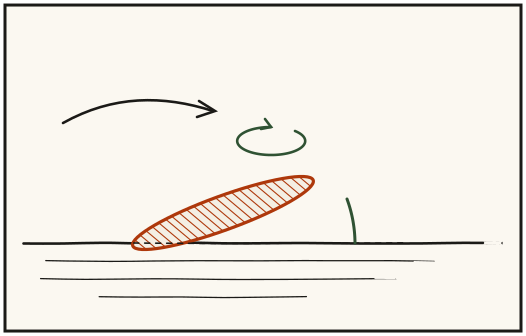
Diagram: a stone tilted about 20 degrees to the water, moving fast and low, spinning.
Time
45 min
Cost
$0
Ages
5 and up
Where
Calm water

01What you need

  • 10–20 flat stones per kid, gathered where collecting is allowedFree
  • A Coast Guard–approved life jacket for any kid who isn't a strong swimmerHave / borrow
  • Shoes with grip. Banks get slick.Have
  • A pocket to carry the best stone homeHave

Where: Any calm lake or pond where throwing stones is allowed.

Water safety: read this first

  • Arm's reach of any kid under 6, or any kid who can't swim, the whole time.
  • Life jacket on weak swimmers near steep banks, docks, or moving water.
  • Clear lane. Throw only when nobody, including boats, swimmers, anglers, and animals, is in front of you.
  • Don't wade out to fetch stones or chase a good one.
  • Never throw onto ice, and never step onto it.
  • Follow posted rules. Some parks don't allow throwing or collecting rocks.
  • Thunder? Leave the water and the shore right away.

02Steps

  1. Find flat, calm water

    DadLook for still water: a pond, a sheltered cove, or a slow pool. Wind chop eats skips. Check that nobody is swimming, fishing, or paddling in front of you, and that rock throwing is allowed there.

  2. Pick the right stone

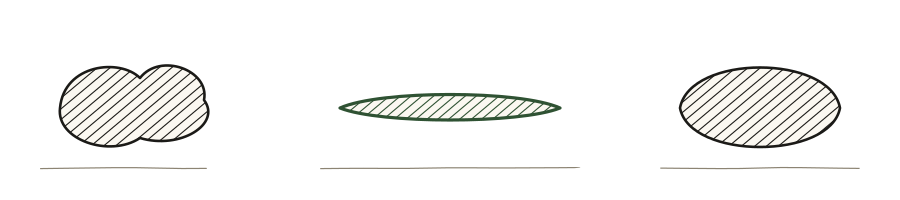
    KidHunt for stones that are flat on both sides, roughly round, about palm-sized, and as thin as a cracker. A little heft helps it hold a line in the wind. Make a "keeper" pile and a "plunker" pile.

    Three stones in side view: a lumpy one marked no, a thin flat one marked yes, and a thick one marked no.
    FIG. 2: Side view. Thin and flat beats pretty.
  3. Grip it like a letter C

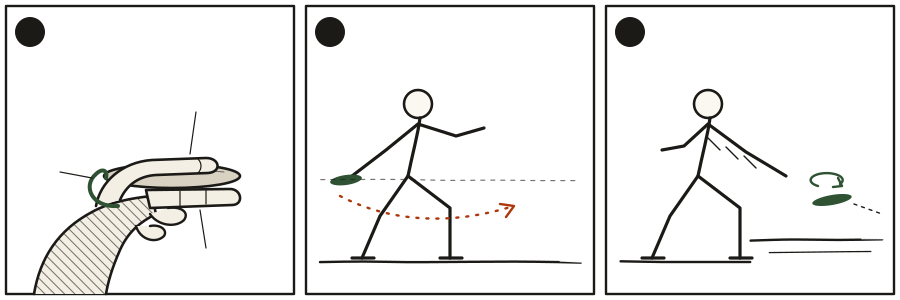
    Dad showsKid copiesLay the stone flat on the middle finger, thumb on top, and curl the index finger around the back edge. The index finger is the spin finger. Small hands can pinch between thumb and two fingers.

    Three panels. One: the grip, with the stone resting on the middle finger, the thumb on top, and the index finger hooked around the back edge. Two: the wind-up, body sideways, knees bent, and the arm drawn back at hip height. Three: the release, the arm sweeping flat across the water, the wrist snapping, and the stone leaving low and spinning.
    FIG. 3: Grip, wind-up, release. Practice the motion three times with no stone first.
  4. Get low and sideways

    KidStand sideways to the water, throwing arm away from it, and bend the knees. The hand should pass about hip height. The lower the release, the flatter the first touch.

  5. Throw flat and spin it

    KidThrow sidearm, like skimming a frisbee. Keep the stone nearly flat with its front edge tipped up a little. In lab tests, the best angle between stone and water was about 20°. Snap the index finger at release so it spins. Spin keeps it level, and speed adds skips.

  6. Read the splash and adjust

    Dad coachesA plunk means the throw was too steep. Get lower. One big bounce and a sink means too much tilt. A wobbling stone needs more finger snap. Keep score, and best of five wins the pick of the keeper pile.

03Variations

Ages 3–5

Skip the throwing contest. Make it a stone hunt, sort by "flat vs round," and let them toss underhand from a dad-held hand. One skip is a big win.

Ages 6–9

The full plan. Add a target: a floating leaf or stick to skip past. Track best skips on the card.

Ages 10+

Test the angle on purpose: five throws flat, five tilted, five steep. Have them say which worked and why.

WindyFind the sheltered side of the water and use heavier stones.
RainCollect and sort stones under a porch and save the throwing for tomorrow.
ColdGloves off only to throw. Keep it short. No ice, ever.

The Friday letter

Get one weekend plan every Friday

A field card like this one for the weekend, one quick plan for a weeknight, and nothing else. Free. The first letter hasn't gone out yet. Sign up now and you'll get it.

One weekend plan every Friday. We never sell your address, and every letter has a one-click unsubscribe. See a sample issue · Privacy

Or start with a free printable: The Weekend Plan Pack.

04Optional story

David picks five smooth stones1 Samuel 17 · 5 min

The Philistine army and the army of Israel faced each other across a valley. Every day for forty days, a giant warrior named Goliath, from Gath, came out and dared Israel to send one man to fight him. Everyone was afraid.

David, the youngest son of Jesse, was a shepherd boy who had only come to bring food to his older brothers. He told King Saul that God had rescued him from a lion and a bear while he guarded his sheep, and God would rescue him now. Saul gave David his own armor, but it was too heavy, so David took it off.

"And he took his staff in his hand, and chose him five smooth stones out of the brook…" 1 Samuel 17:40 (KJV)

David said he came "in the name of the LORD of hosts" (v. 45). He slung one stone, it struck Goliath in the forehead, and the giant fell.

Ask at the water: David chose his stones carefully, then trusted God with the throw. What's something big you're nervous about? Who helps you be brave?

Plain-language retelling. Quotes from the King James Version (public domain).

05Sources

  • Source for the 20° angle. Clanet, Hersen & Bocquet, "Secrets of successful stone-skipping," Nature 427, 29 (2004).

Filed under: Outdoors · Faith (optional)