Two soft ropes about 3 feet long, in two colors if you have themHave / $5
A chair back or table leg to tie aroundHave
Where: A kitchen table or porch.
Rope safety: read this first
Nothing around necks, ever, not even as a joke.
Practice knots only. Nothing in this plan holds a person, climbs or lifts anything heavy.
Don't pull a rope hard toward someone's face. Pull with the rope pointing at the floor.
02Steps
Name the parts
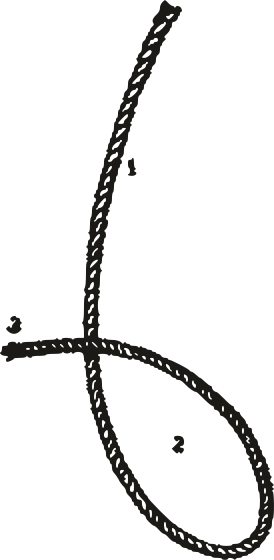
DadLay a rope on the table. The long part you aren't working with is the standing part. A loop made by turning the rope back on itself is a bight. The free end is the end.
FIG: The parts of a rope: standing part, bight, end, from the 1911 scouting handbook, p. 49.
Tie the figure-eight
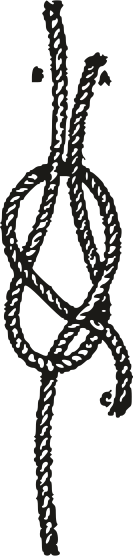
Dad showsKid copiesMake a bight. Take the end around behind the standing part and down through the bight, then pull snug. Tie one at the end of a rope, and see how big a lump it makes.
FIG: Figure-of-eight knot, from the 1911 scouting handbook, p. 49.
Make a bight in the first rope
KidBend the end of the first rope back on itself to make a bight. Hold it between your thumb and finger.
Pass the second rope through
Dad showsKid copiesBring the end of the second rope up through the bight, around the whole bight, and tuck it under its own standing part.
Pull and check
TogetherPull both standing parts slowly. A sheet bend gets tighter and keeps the two ropes joined. If it falls apart, begin again.
FIG: Sheet bend or weaver's knot, from the 1911 scouting handbook, p. 50.
Make it useful
KidJoin your two ropes and tie a figure-eight at each end. Stretch the long rope across the room and lay a dish towel on it.
03If it stalls
If the sheet bend slips apart, you probably missed tucking the end under its own standing part.
Using two colors makes it easy to see which rope goes where.
Untie slowly; a good sheet bend comes undone without a fight.
04Variations
Ages 5–6
Just the figure-eight, tied around a pencil case or a bundle of crayons.
Ages 7–9
The full plan.
Ages 10+
Join two ropes of different thickness and see how the bend sits. Tie the sheet bend with one hand holding the rope still.
RainThis is a kitchen-table plan.
HotShade and a picnic table. Wet rope is harder, which makes a good challenge.
A field card like this one for the weekend, one quick plan for a weeknight, and nothing else. Free. The first letter hasn't gone out yet. Sign up now and you'll get it.
One weekend plan every Friday. We never sell your address, and every letter has a one-click unsubscribe. See a sample issue · Privacy
1911 scouting handbook, p. 49. The 1911 book names the standing part, the bight and the end, and describes the figure-eight knot: make a bight, lead the end around behind the standing part and down through the bight. Project Gutenberg (public domain in the USA) Checked Oct 15, 2026
1911 scouting handbook, p. 50. The 1911 book describes the sheet bend, also called the weaver's knot, for tying two rope ends together: make a bight with one rope, pass the other rope's end up through it and around the whole bight, then under its own standing part. Project Gutenberg (public domain in the USA) Checked Oct 15, 2026
Dad Field Manual · Field card 66 · Classic Field Skills
Join two ropes with a sheet bend
Thirty minutes, two ropes and a table. Learn a stopper knot and the knot sailors used to join two rope ends, then use them to make a longer line.
Time
30 min
Cost
$0
Ages
7 and up
Where
Anywhere
Since 1911: The knots are the same as in 1911. Use them for play and camp chores only: do not trust a knot you tied at the kitchen table with a person's weight, or for climbing or towing.
What you need
Two soft ropes about 3 feet long, in two colors if you have them
A chair back or table leg to tie around
Rope safety: read this first
Nothing around necks, ever, not even as a joke.
Practice knots only. Nothing in this plan holds a person, climbs or lifts anything heavy.
Don't pull a rope hard toward someone's face. Pull with the rope pointing at the floor.
Steps
Name the parts. Find the standing part, the bight (a turned-back loop) and the end.
Tie the figure-eight. Make a bight, take the end behind the standing part and down through the bight.
Make a bight in the first rope. Bend the end of the first rope back on itself to make a bight.
Pass the second rope through. Pass the second rope up through the bight, around the whole bight and under itself.
Pull and check. Pull both long ends slowly to snug the sheet bend.
Make it useful. Join two ropes, tie a figure-eight at each end and lay a towel across.
If it stalls
If the sheet bend slips apart, you probably missed tucking the end under its own standing part.
Using two colors makes it easy to see which rope goes where.