01What you need
- Three clear plastic jars, cups or food containers with lidsHave
- Tape or sticky labels and a markerHave
- Their own money: birthday cash, allowance or chore money, in coins and small billsHave
- A picture of what they're saving for: a drawing, or a photo printed or cut from an adFree
Where: Any table where the jars can then live on a shelf your kid can reach but a baby can't.
Before you start
- Coins are a choking hazard. Most children who die from choking are under 5. Keep the jars lidded and up high if a baby or toddler lives in the house.
- Watch the big kid and the little kid. Older siblings often hand small things to younger ones. Coins stay at the table.
- Use plastic, not glass, so a dropped jar is just a mess.
- The jars are theirs. Never take money out as a punishment or borrow from Save without asking. That's what teaches them the jars are real.
02Steps
Label three jars
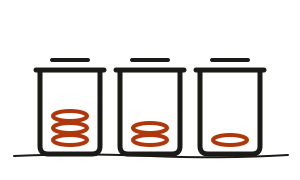
TogetherWrite SPEND, SAVE and GIVE on the three jars. Pre-readers can draw a picture on each: a shopping bag, a piggy bank, a heart. Say: "Every time you get money, some goes in each jar. You get to decide how much."
Pick a goal for Save
KidAsk: "What's something you want that costs more than you have right now?" Look up the real price together and write it on a label. Tape the picture of it to the Save jar. Say: "Some things are worth waiting for."
Pick who Give is for
KidAsk: "Who would you like to help with this jar?" It might be an animal shelter, a food bank, a friend's fundraiser, or your family's place of worship if you have one. Let them choose. Write it on the jar.
Split the money
KidCount their money out on the table. Ages 4 to 5 can sort coins by kind first and count each pile. Offer a simple starting split, like one coin in Give, two in Save, the rest in Spend, then let them change it. Say the totals out loud: "Three dollars in Spend, two in Save, one in Give."
Measure the goal
TogetherDraw a line on a strip of paper from $0 to the goal price and tape it beside the Save jar. Color in how far they've got. Ask: "If you add a dollar a week, how many weeks until you get there?" Count the weeks on a calendar.
Make it weekly
DadPick a day, like allowance day or Sunday breakfast, for a two-minute jar check. New money gets split, Save gets counted, and the progress line gets colored. When Give is ready, go deliver it together so they see where it went.
03If it stalls
- If they want to put it all in Spend, let them, once. Next time the toy they want is out of reach, point at the empty Save jar and ask what they'd do differently. No lecture.
- If the goal is so far off they lose interest, pick a smaller goal they can reach in three or four weeks first.
- If they ask to spend Save money on something else, ask: "Is this worth more to you than the thing on the jar?" Then let them decide. It's their money.
- If they don't get money often, count chores, birthday cards and found coins. The habit matters more than the amount.
04Variations
Ages 4–5
Coins only, and sort them before counting. Keep the goal small and close, like a $3 toy. Draw the labels instead of writing them. The CFPB's early-childhood handout suggests games where kids match, sort and count coins.
Ages 6–9
Add bills and a real goal price from a store website. Let them set their own split and write it on the Spend jar so they remember it next week.
Two kids
Each kid gets their own three jars and their own goal. No comparing totals. Siblings can team up on one Give jar if they want to.
The Friday letter
Get one weekend plan every Friday
A field card like this one for the weekend, one quick plan for a weeknight, and nothing else. Free. The first letter hasn't gone out yet. Sign up now and you'll get it.
One weekend plan every Friday. We never sell your address, and every letter has a one-click unsubscribe. See a sample issue · Privacy
05Sources
- Saving and waiting, ages 3 to 5. The CFPB's Money as You Grow page on young children and saving suggests telling kids that some things are worth waiting for, and finding a jar or can, labeling it for saving and having them put some of the money they get into it to save for a toy or treat. Consumer Financial Protection Bureau Checked Oct 15, 2026
- Spend, save or share, ages 6 to 12. The CFPB's middle-childhood handout says kids this age may get money as gifts and allowances and can decide whether to spend it, save it or share it, and advises parents to set ground rules and then let kids make decisions and learn from the consequences. Consumer Financial Protection Bureau Checked Oct 15, 2026
- Coins as a choking hazard. The AAP lists coins among household items to keep away from infants and young children, says most children who die from choking are under 5, and notes many choking incidents happen when older siblings give small objects to younger ones. American Academy of Pediatrics (HealthyChildren.org) Checked Oct 15, 2026
- Coin games for young kids. The CFPB's early-childhood handout suggests games or activities with coins in which kids match, sort and count them, and helping young children learn to wait for things they want. Consumer Financial Protection Bureau Checked Oct 15, 2026
Filed under: Money