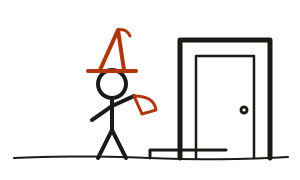
A soft, comfortable costume or pajamas with earsHave
Small bucket or bagHave
Stroller or carrier for the walk homeHave
A few safe swap treats: a small board book, a bath toy or a snack they already eat safelyHave
Where: Three to six houses you know, a friend's door, or a daytime event, before it gets dark.
Before you start
Candy is a choking hazard. AAP says babies and toddlers should avoid hard candy, gum, gummies, popcorn, small candies and whole nuts. Wrappers, stickers and small toys are hazards too.
Hands on. AAP says always go with young children. Hold hands or carry them at every street.
Easy costume. AAP says costumes should fit and be short enough not to trip on. Face paint, tested on a small patch of skin first, is safer than a mask.
Bedtime wins. AAP says to consider earlier Halloween events so younger kids keep their regular bedtime.
02Steps
Practice the costume
DadA few days before, put the costume on for 10 minutes of normal play. If they pull it off, try just the hat or ears. Practice helps it feel familiar. Pajamas are fine if they still say no.
Practice the knock
TogetherAt home, they knock on a bedroom door and say "Trick or treat!" You open it, put a block in their bucket, and they say thank you. Swap roles. It turns the strange part into a game.
Go early, go short
TogetherHead out while it's still light. Three to six houses you know is plenty. Skip any house with spooky decorations or loud sounds: "Not that one. Let's find a pumpkin house." Dad carries the bucket. Nothing gets eaten on the walk.
Name the scary things
DadIf something frightens them, stop, kneel down and say what it is: "That's a man in a mask. Under it is a regular person." Then move on. You don't need to make them look.
Empty the bucket, then swap
DadAt home, Dad empties the bucket first and takes out all candy, wrappers and small items. Then they get their swap: a board book, a bath toy or a snack they already eat safely. Candy stays up high, out of reach. Older siblings eat theirs away from the toddler.
Bath and bed on time
DadWash off any face paint, then the usual bath, book and bed. Tomorrow, look at the photos together and say what they did: "You knocked on four doors."
03If it stalls
If they won't wear the costume, pajamas with a drawn-on nose count.
If they'd rather hand out candy than get it, let them. Sitting on the porch with you is Halloween too.
If they melt down at the second house, that was the night. Go home and call it a win.
04Variations
Age 1
Carry them in the costume to two or three doors of people you know. The photo is the point.
Age 2
They walk to each door holding your hand and say thank you, or wave.
Age 3
They can knock and say "Trick or treat." Let them pick which houses look friendly.
A field card like this one for the weekend, one quick plan for a weeknight. Nothing else. The first letter hasn't gone out yet. You'll get one email to confirm.
Toddlers and treats. AAP says babies and toddlers should avoid hard candy, caramel apples, popcorn, gum, small candies, gummies, pumpkin seeds and whole nuts, and that wrappers, stickers, small toys and temporary tattoos are also choking hazards; it says to always go with young children and to consider earlier Halloween events so younger kids keep their regular bedtime. American Academy of Pediatrics (HealthyChildren.org) Checked Oct 17, 2026
Who is most at risk of choking. AAP says babies and toddlers are at the highest risk of choking, lists hard, gooey or sticky candy, chewing gum and popcorn among foods to avoid, and says to keep high-risk foods from children until 4 years of age or older. American Academy of Pediatrics (HealthyChildren.org) Checked Oct 17, 2026
Toddlers don't need the whole night. A costume they're used to, a few friendly doors before dark, and home in time for bed.
Time
1 hour
Cost
$0
Ages
1 to 3
Where
Your street
What you need
A soft, comfortable costume or pajamas with ears
Small bucket or bag
Stroller or carrier for the walk home
A few safe swap treats: a small board book, a bath toy or a snack they already eat safely
Before you start
Candy is a choking hazard. AAP says babies and toddlers should avoid hard candy, gum, gummies, popcorn, small candies and whole nuts. Wrappers, stickers and small toys are hazards too.
Hands on. AAP says always go with young children. Hold hands or carry them at every street.
Easy costume. AAP says costumes should fit and be short enough not to trip on. Face paint, tested on a small patch of skin first, is safer than a mask.
Bedtime wins. AAP says to consider earlier Halloween events so younger kids keep their regular bedtime.
Steps
Practice the costume. Try the costume on for 10 minutes of play a few days before.
Practice the knock. Practice at home: they knock and say "Trick or treat," you give a block, they say thank you. Swap roles.
Go early, go short. Go before dark, three to six friendly houses. Skip the spooky ones. Dad carries the bucket; nothing eaten on the walk.
Name the scary things. If something scares them, kneel and name it plainly, then move on.
Empty the bucket, then swap. Dad empties the bucket, removes candy and wrappers. Swap: book, bath toy or safe snack. Candy stays up high, out of reach; siblings eat theirs away from toddler.
Bath and bed on time. Wash off paint, then the usual bath, book and bed. Look at photos tomorrow.
If it stalls
If they won't wear the costume, pajamas with a drawn-on nose count.
If they'd rather hand out candy than get it, let them. Sitting on the porch with you is Halloween too.
Doors knocked
home by
Our Halloween: costume, favorite door, what made them smile