When your kid repeats something from the other house
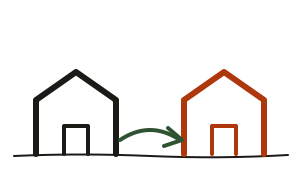
"Mom says you never pay for anything." "At Dad's I can stay up till ten." Kids carry words between homes, and how you react teaches them whether it's safe to love both houses. Here are the words to use in the moment and what to do afterward, adult to adult.
Dad Field Manual editors · Drafted with AI help · Published Oct 15, 2026
This isn't legal advice. For custody, child support or parenting schedules, talk to a family-law attorney.
01What you need
A few calm lines you've practiced, on a card or in your phoneFree
Your phone, for a short message to your co-parent laterHave
Your house rules, written down, three to five of themHave
Where: Usually the car, the kitchen or bedtime. The follow-up with your co-parent happens later, by message, out of your kid's earshot.
Before you start
If your kid says something that sounds like abuse or neglect, stay calm, listen and don't quiz them. Call 911 if they're in danger now, or your local child protective services agency.
Kids are never messengers or reporters. Don't send replies back through them, and don't ask what goes on at the other house.
Crisis line. If your kid, or you, talks about not wanting to be alive, call or text 988, the Suicide & Crisis Lifeline, any time.
02Steps
Breathe before you answer
DadWhat they said may sting. Your face and voice in the next ten seconds matter more than your words. Take a breath, keep your voice even, and buy a moment: "Hm. Thanks for telling me." Your kid is watching to see if it's safe to bring things up.
Ask how they feel about it
DadKids often repeat things because they're confused or worried, not to hurt you. Ask, "How did that feel to hear?" and listen. Name what you notice: "Sounds like that was confusing" or "You seem worried about it." Don't ask who said it, when, or what else was said.
Don't defend yourself or badmouth back
DadSkip "That's a lie" or "Well, your mom..." Say something true and calm about yourself, then close the subject: "I see it differently, and that's a grown-up thing for me and Mom to talk about. You don't have to figure it out." Say it the same way whether the comment was about you or about the other house.
Tell them they can love both homes
DadSay it out loud: "You get to love both of us. You never have to pick a side." Kids caught between parents can feel they have to choose. Hearing this from you takes that weight off.
Answer "Mom lets me" with your rule, not a fight
DadWhen they say the other house allows something, keep it short and neutral: "Different houses, different rules. At this house, bedtime is 8:30." Don't criticize the other rule or ask your kid to explain it. If it's something that matters, such as bedtime, screens or homework, bring it to your co-parent later and try to line it up.
Take adult issues to the adult
YouIf something needs a response, message your co-parent, not your kid, and keep it about the kid: "Hi. Ava seemed upset about something she heard about money. Can we both keep money talk away from the kids? Thanks." If it's a rule, ask: "Ava says bedtime's 9:30 at yours. Want to agree on one time for school nights?"
03If it stalls
If they repeat it to get a reaction, give a boring one: "Okay. Want a snack?" A calm, flat answer usually ends the game.
If it keeps happening, don't make your kid the problem. Message your co-parent once, calmly, about how it's affecting the kids. A family therapist or your kid's doctor can help too.
If you slip and say something sharp, repair it: "I shouldn't have said that about your mom. That was a grown-up feeling, and it's not yours to carry."
If a teen pushes back with "Mom's right about you," don't argue the point. Say, "You can have your own opinion of me. I'm here when you want to talk."
04Variations
Ages 3–6
Little kids repeat words without knowing what they mean. Keep it to one line, "That's a grown-up thing. We both love you," and move on to something ordinary.
Ages 7–12
They may be testing which version is true. Stay calm, skip the details, and say, "You don't have to figure out grown-up stuff. That's our job."
Teens
They'll form their own views. Don't campaign for yours. Listen more than you talk, and keep house rules short and steady: "Here, phones charge in the kitchen at 10."
A field card like this one for the weekend, one quick plan for a weeknight, and nothing else. Free. The first letter hasn't gone out yet. Sign up now and you'll get it. beehiiv, which sends the letter, will email you once to confirm your address.
One weekend plan every Friday. We never sell your address, and every letter has a one-click unsubscribe. See a sample issue · Privacy
No negative statements, no questioning, no messages. Michigan's guideline says parents should not make negative statements about the other parent or that parent's family, ask the child about the other parent's life, or pass messages through the child, and should keep communication open so the child feels comfortable bringing concerns to either parent. Michigan Supreme Court, State Court Administrative Office Checked Oct 15, 2026
Choosing sides harms kids; report suspected abuse. Ohio's guide says making a child choose between parents, questioning the child about the other parent, putting the other parent down, and using the child as a messenger, spy or mediator harm children. It says children who hear negative talk about a parent may feel they must choose and may develop emotional and behavioral problems, and to contact local children services if abuse or neglect is a concern. Supreme Court of Ohio Checked Oct 15, 2026
Love both parents without feeling disloyal. AAP says children need to see either parent without worrying about hurting the other and to build a relationship with each without feeling disloyal, and should not be used as go-betweens or pumped for information as they move between homes. American Academy of Pediatrics (HealthyChildren.org) Checked Oct 15, 2026
Listen to feelings; agree on rules for both homes. AAP advises letting your child share fears, worries and feelings with you, not criticizing each other in front of the child, and agreeing on a set of consistent rules for both households. American Academy of Pediatrics (HealthyChildren.org) Checked Oct 15, 2026
When your kid repeats something from the other house
"Mom says you never pay for anything." "At Dad's I can stay up till ten." Kids carry words between homes, and how you react teaches them whether it's safe to love both houses. Here are the words to use in the moment and what to do afterward, adult to adult.
Time
5 min in the moment
Cost
$0
Ages
3 and up
Where
Wherever it comes up
What you need
A few calm lines you've practiced, on a card or in your phone
Your phone, for a short message to your co-parent later
Your house rules, written down, three to five of them
Before you start
If your kid says something that sounds like abuse or neglect, stay calm, listen and don't quiz them. Call 911 if they're in danger now, or your local child protective services agency.
Kids are never messengers or reporters. Don't send replies back through them, and don't ask what goes on at the other house.
Crisis line. If your kid, or you, talks about not wanting to be alive, call or text 988, the Suicide & Crisis Lifeline, any time.
Steps
Breathe before you answer. Take a breath, keep your voice even, and say "Thanks for telling me."
Ask how they feel about it. Ask how it felt to hear, name the feeling, and don't ask who said what.
Don't defend yourself or badmouth back. Don't argue or criticize back; say "That's a grown-up thing for Mom and me to sort out."
Tell them they can love both homes. Say "You get to love both of us. You never have to pick a side."
Answer "Mom lets me" with your rule, not a fight. Say "Different houses, different rules. Here, it's this," and talk to your co-parent later.
Take adult issues to the adult. Later, message your co-parent about it briefly and calmly, kept to what the kid needs.
If it stalls
If they repeat it to get a reaction, give a boring one: "Okay. Want a snack?" A calm, flat answer usually ends the game.
If it keeps happening, don't make your kid the problem. Message your co-parent once, calmly, about how it's affecting the kids. A family therapist or your kid's doctor can help too.