Thirty minutes, a rope, some string and a fallen branch. Finish a rope end so it stops unraveling, then tie the hitch woodsmen used to haul logs and drag a branch to the brush pile.
Dad Field Manual editors · Drafted with AI help · Published Oct 15, 2026
A soft rope about 4 feet long, with a cut or fraying endHave / $5
About 2 feet of thin string, kitchen twine or waxed threadHave
Scissors (Dad cuts for younger kids)Have
A fallen branch the kid can drag one-handed, or a laundry basketFree
Where: Whip the rope at a kitchen or picnic table, then drag a branch across the yard, or a laundry basket across the floor.
Rope safety: read this first
Nothing around necks, ever, not even as a joke. Rope stays on branches, baskets and broomsticks.
Practice knots only. Nothing in this plan holds a person, climbs, lifts or tows anyone, including a kid on a sled or wagon.
Flame is Dad's job. If you melt a synthetic end, do it outside, away from kids, and store the lighter out of reach. Cool any burn under cool water, not ice.
Drag, don't lift. Keep the branch on the ground, wear gloves, and check no one is behind it.
02Steps
See why ends need whipping
DadShow a cut or frayed rope end and untwist it a little. Say, "An open end keeps unraveling. Whipping wraps it tight so it stays put."
Lay the string and wrap over it
Dad showsKid copiesLay the end of the string along the rope, pointing away from the rope's end, and hold it down with your thumb. Wind the long part of the string tightly around the rope and over that end, working toward the rope's end, until the string's end is covered.
Lay a loop and finish
KidA few turns from the rope's end, lay the string back along the rope as a loop. Keep wrapping over that loop until you run out of space. Pull the free end of the loop tight so it disappears under the wraps, then cut it off close.
FIG: Whipping a rope's end, from the 1911 scouting handbook, p. 49.
Start the timber hitch
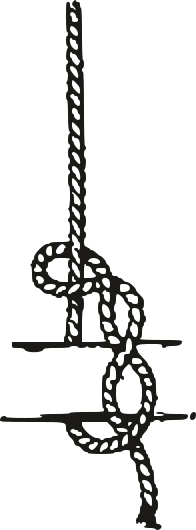
Dad showsKid copiesTake the other end of the rope around the branch near its thick end. Bring the end around the long part of the rope, back toward the branch.
Twist it on itself and pull
KidWrap the end around its own part three times, then pull the long part. The 1911 book says the strain is what holds it. Let go of the pull and it loosens right off.
FIG: Timber hitch, from the 1911 scouting handbook, p. 51.
Haul it to the pile
TogetherDrag the branch along the ground to the brush pile, then slack the rope and slip the hitch off. When they can whip an end and tie the hitch without help, sign their field card.
03If it stalls
If the whipping slides off, the wraps are too loose. Start again and pull each turn snug.
If the loop end won't pull through, there are too many turns over it. Unwind two and try again.
If the timber hitch slips, add another twist around its own part. Keep pulling steadily; it holds under strain.
Thin, slippery string is hard for small fingers. Kitchen twine grips better.
04Variations
Ages 5–6
Skip the whipping. Wrap the rope end with tape, then tie the timber hitch around a laundry basket handle with Dad's help.
Ages 7–9
The full plan.
Ages 10+
Whip both ends of the rope, then tie the timber hitch around a branch with eyes closed.
RainWhip the rope at the table, then tie the timber hitch around a laundry basket handle and drag it across the floor.
ColdWhip the rope inside where fingers stay warm, and wear gloves for the branch hauling.
A field card like this one for the weekend, one quick plan for a weeknight, and nothing else. Free. The first letter hasn't gone out yet. Sign up now and you'll get it. beehiiv, which sends the letter, will email you once to confirm your address.
One weekend plan every Friday. We never sell your address, and every letter has a one-click unsubscribe. See a sample issue · Privacy
1911 scouting handbook, pp. 48–49. The 1911 book says a scout should whip rope ends so they don't fray: lay the end of the twine along the rope, hold it with the thumb and wind over it until it's covered, then lay a loop back with the other end, wind over that, pull the end tight and cut it close. Project Gutenberg (public domain in the USA) Checked Oct 15, 2026
1911 scouting handbook, p. 51. The 1911 book gives the timber hitch for hauling timber: pass the end around the log, lead it around the standing part and back, and make two or more turns on its own part. It says the strain holds it securely. Project Gutenberg (public domain in the USA) Checked Oct 15, 2026
Lighters and burn first aid. The American Academy of Pediatrics says to store matches and lighters out of a child's reach, to cool a burn in cool water as soon as possible, and not to use ice, butter or grease on it. American Academy of Pediatrics (HealthyChildren.org) Checked Oct 15, 2026
Dad Field Manual · Field card 93 · Classic Field Skills
Whip a rope end and tie a timber hitch
Thirty minutes, a rope, some string and a fallen branch. Finish a rope end so it stops unraveling, then tie the hitch woodsmen used to haul logs and drag a branch to the brush pile.
Time
30 min
Cost
$0
Ages
7 and up
Where
Table, then yard
Since 1911: The 1911 book used hemp rope. Most rope now is nylon or polyester: a few wraps of tape stop fraying too, or an adult can melt the end outdoors (it's hot enough to burn). And knots here are for chores and play, never to hold a person.
What you need
A soft rope about 4 feet long, with a cut or fraying end
About 2 feet of thin string, kitchen twine or waxed thread
Scissors (Dad cuts for younger kids)
A fallen branch the kid can drag one-handed, or a laundry basket
Rope safety: read this first
Nothing around necks, ever, not even as a joke. Rope stays on branches, baskets and broomsticks.
Practice knots only. Nothing in this plan holds a person, climbs, lifts or tows anyone, including a kid on a sled or wagon.
Flame is Dad's job. If you melt a synthetic end, do it outside, away from kids, and store the lighter out of reach. Cool any burn under cool water, not ice.
Drag, don't lift. Keep the branch on the ground, wear gloves, and check no one is behind it.
Steps
See why ends need whipping. Look at a frayed end and untwist it a little to see why it needs whipping.
Lay the string and wrap over it. Lay the string along the rope, hold it with your thumb, and wrap tightly over it toward the end.
Lay a loop and finish. Lay a loop back along the rope, wrap over it, pull the end tight and trim.
Start the timber hitch. Pass the end around the branch, then around the rope's long part.
Twist it on itself and pull. Twist the end around itself three times and pull the long part tight.
Haul it to the pile. Drag the branch to the brush pile, then slack the rope and slip it off.
If it stalls
If the whipping slides off, the wraps are too loose. Start again and pull each turn snug.
If the loop end won't pull through, there are too many turns over it. Unwind two and try again.