Make a sundial and mark the hours
The 1911 book calls it a hunter's clock: a board, a slanted pointer aimed north, and a shadow that tells the time. Build it in the morning, mark an hour line each time the clock strikes, and by evening you have a clock that runs on the sun.
- Time
- 1 hr, spread over a sunny day
- Cost
- $0
- Ages
- 6 and up
- Where
- A sunny, level spot
Since 1911: The 1911 book lines the dial up with the North Star at night and divides it into 24 equal parts. On a flat board the hour lines aren't evenly spaced (NASA's sundial page lists the angles), so this plan marks them by the clock instead. A phone compass can find north. Sundials keep sun time: during daylight saving time they read an hour behind the clock, and sun time drifts against the clock through the year by up to about 15 minutes. Never look at the sun to aim it.
What you need
- A flat board or stiff cardboard about 15 inches square
- A piece of stiff cardboard for the pointer
- A protractor, ruler, marker, scissors and tape or glue
- A phone with a compass app and a map that shows your latitude
- A clock or phone to mark the hours
- A couple of rocks or bricks to hold the board down
Before you start
- Never look at the sun, not even with sunglasses. Look at the shadow on the board, never the sky.
- Grown-ups handle the scissors or saw for the pointer.
- Hats and sunscreen if you'll be out checking the dial all day.
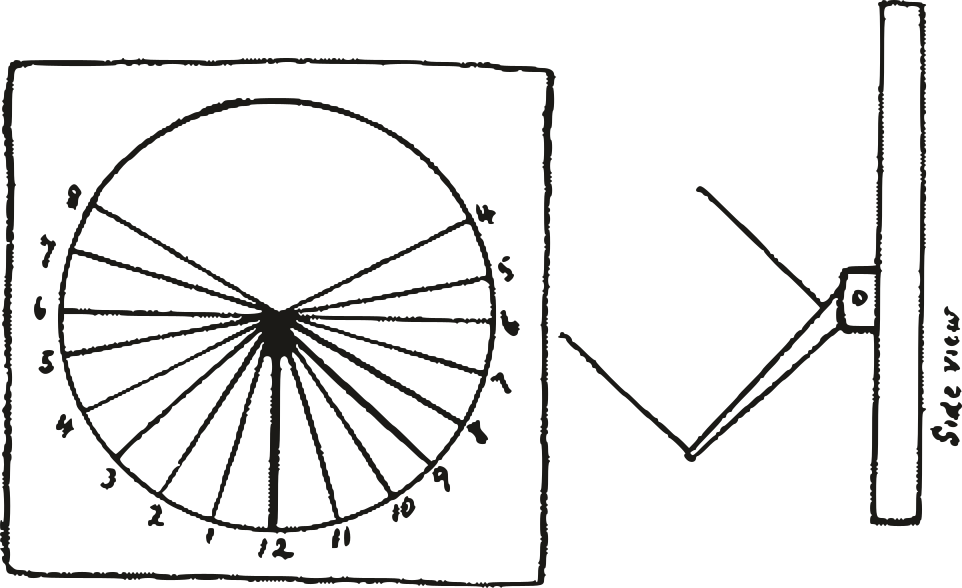
Steps
- Find your latitude and north. Look up your latitude on a phone map, find north, and mark it on the ground.
- Cut the pointer. Cut a right-triangle pointer with its tip angle equal to your latitude.
- Build and aim the dial. Glue the pointer on the noon line, sloped edge rising north. Set it level, aimed north, and weigh it down.
- Mark the hours by the clock. Each hour on the hour, trace the shadow and label it. During daylight saving time, label it one hour less.
- Read it the next day. Read the dial, then check the clock. Add an hour during daylight saving time.
- Check it again in a month. In a month, check it against the clock again. A few minutes off is normal.
If it stalls
- If clouds roll in partway through, mark what you can and finish the hours on the next sunny day. Don't move the board.
- If the shadow is fuzzy, read the middle of the fuzzy edge, and trace with a ruler.
Minutes off from the clock
Signed off: can do this.Signed by Date