Play Quicksight and Farsight: two eye games
Thirty minutes, paper, a marker and a handful of checkers. Two 1911 games that train the eye: one tests what you see in five seconds, the other how far away you can see it.
- Time
- 30 min
- Cost
- $0
- Ages
- 5 to 12
- Where
- Kitchen table and a hallway
Since 1911: The 1911 book uses nuts and pebbles as counters and plays Farsight outdoors from 100 yards. The AAP lists nuts, coins and marbles among choking hazards for young children, so use checkers or paper squares. Indoors, measure Farsight in steps down a hallway and try to beat your own best.
What you need
- Paper, a ruler and a marker for two 5-by-5 grids and two rabbit cards
- 10 counters in two kinds: 5 red and 5 black checkers, or paper squares in two colors
- A dish towel or a book to cover the board
Before you start
- No nuts, coins or marbles as counters if a baby or toddler is around. Use checkers or paper squares.
- Clear the hallway floor before Farsight, since the player walks forward watching the card, not their feet.
Steps
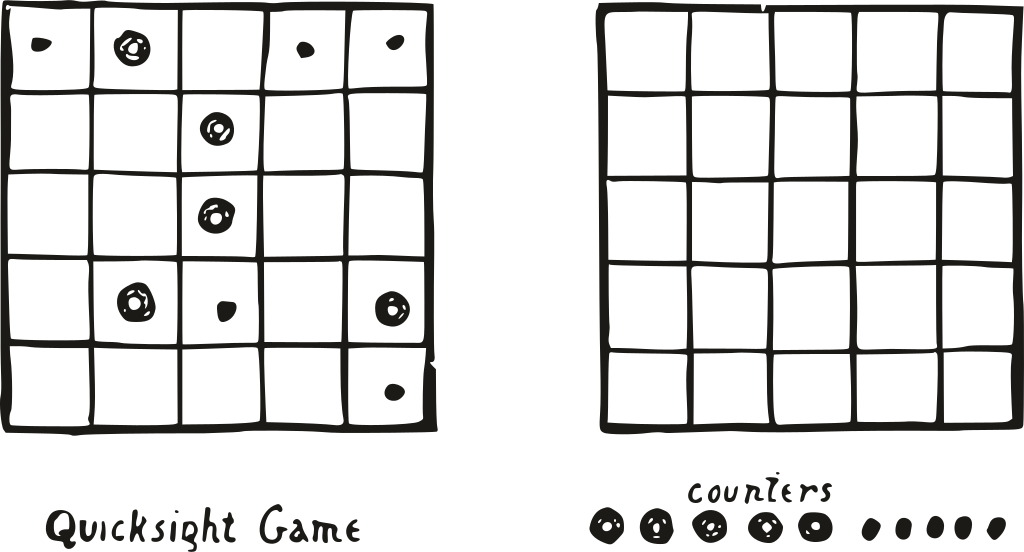
- Make two Quicksight boards. Draw two matching 5-by-5 grids, each about a foot square.
- Play Quicksight. Set 10 counters in a pattern, show it for five seconds, cover it, and copy it from memory.
- Score and swap. Score plus one for each right counter, minus one for each wrong; swap roles.
- Draw two rabbit cards. Draw the same animal outline on two six-inch cards.
- Play Farsight down the hall. Prop a spotted card in good light; the kid walks closer until they can copy the spots. Count the steps.
- Check and try to beat it. Compare the cards, record the steps, and try to beat your best.
If it stalls
- If five seconds is too short, start with ten, or with six counters instead of ten.
- If the kid copies the spots but gets the places wrong, ask "Which spot is nearest the ear?" to give them a landmark.
Quicksight points · Farsight steps
Signed off: can do this.Signed by Date